- Under the Birch Tree
Ahead of Kokernag
and down the Sinthan
A dense pine forest and in the midst of it
a lone Birch tree
Yes… long-standing, solitary
Timeless
Heretofore its boughs rain paper
Much the same
Had its fate transmuted into pen
Long before the paper was born
I would have known of yore
When we were monarchs
And stood apprised about
Who commutated My gold into bronze
I may have espied
When did elephants broke into archives
Quite possible discovered that scroll
Wherein Satisar would have revealed
When did the rainbow of life bloom
hither
Wulur may have recounted
Who annihilated Nagas
And river Rumshu spoken of afflictions
That hapless Naga King bore
—A Translation of Shanaz Rashid’s Poem ‘Burz e kulis Tal’
2. Suicide
When the branches of history’s verdant body
were pruned,
praying hands, like intoxicated leaves,
were sewn with the hem of the bathhouse;
the future was sacrificed
beneath the feet of bodiless shadows,
and bloody dirges of blood
rained spittle upon the void;
shameless bellows of fire
rejoiced upon a sky,
and recited a meaningless prayer,
a faceless incantation—
in some unknown hour of that very night,
my love-filled heartbeats
leapt from a star,
committed suicide,
and became immortal.
—A Translation of Nazir Azad’s Poem ‘Khudkashi’
3. Good Girl
1.
if i were a good girl,
i would have inscribed upon life’s first page
the crackle of your slippers;
but i am an ancient poet,
suspended within the rigging of modernism—
my crying must not deviate from measure,
my tears must not exceed the metre.
2.
if i were a good girl,
i would have etched your laughter on my face;
but i am a useless paper—
words and sentences, letters and margins—
question: vile, unkind, rude.
3.
if i were a good girl,
i would have sown flowers beneath your window;
had you looked down, you might have spoken psalms;
but i am the thorn-bush of the road—
and whenever you pass, you gather your mantle.
4.
if i were a good girl,
i would have ablated my light for your sleep,
i would have sucked the sun,
i would have swallowed the moon;
if i could have been nothing else,
at least i would have become clouds;
but i turned out to be a candle—
and i burned for your heresy.
5.
if i were a good girl,
i would have kept my height in check;
shame, that i fit within your pheran—
even God resents these towering trees:
no one lingers beneath their trunks,
no shade, no fruit to make one stay.
6.
if i were a good girl,
i would have expunged the word “no” from dictionaries;
yet i read even those letters that lie beyond the margins—
you presumed i would follow your finger;
i became the autumn wind—
and first erased “yes”.
7.
if i were a good girl,
my forehead would have carried the mark of prostration;
at the sight of me, suffering might have softened into cheer—
but what has become of my eyes?
i read jewellery as chains.
8.
if i were a good girl,
i would have known the road
the world has trodden since time immemorial;
am i alone in this?
but i am a reviled female serpent—
raising my head here and there,
my body colliding against cliffs,
burrowing beneath houses and their bases,
seeking whose skeletons are entombed in dust.
9.
if i were a good girl,
i would have leapt into the oven
at the sight of that great, radiant face;
but i knead flour,
bake bread every day,
set up my stall—
chin resting on my hand, till dusk
i watch the road.
10.
if i were a good girl,
i would not have been born;
for only she who is not born remains innocent—
all others are fallen,
looking for witnesses,
finding evidence of their own murder,
unbalancing the universe.
—A Translation of Nighat Saheba’s ‘Asal Koor’
4. Festival of Sacrifice
I said what you wanted to hear.
This heart kept crying out—
what all did it plead?
The moment my poems were born,
I strangled them at the throat—
their rhymes, their metres, their metaphors.
I set the letters aflame,
sent the words to the gallows.
What did I have left with me?
What was there for me to sacrifice?
— A Translation of Nighat Saheba’s ‘Eid-E-Qurban’
5. Verdict
Those entrusted with judgment had already passed their verdict;
courts rose at every cardinal point
Each moment, each day, each passing year—
a whole life gathered, bound, and called to account
Countless courts, countless judges, each inscribing verdicts against a single name.
They cloaked her in the nameless garment of silence
and loosed upon her a rain of arrowed glances
Smiling—secrets at their disposal—
the spears arrived as well
Whispers grazed the ear softly,
yet wrenched the heart apart
The wounds inflicted by the tongue remain unhealed to this day;
the specters of scornful laughter still haunt
All the riches of language bent to their will,
while word-pythons lay coiled, ravenous.
From an untroubled sky,
snide remarks fell like sudden rain
They seized her by the throat, rending even the collar;
unseen hands stripped her in the marketplace—abraded, undone, maimed
Her hands and feet were already bound behind her, without consent;
chains of questions were cast upon her without count
Like a torn scrap caught in a windstorm,
she was seen by all.
Gradually, they led her through the meanings nested within each matter
and then asked her to confess
“The accusations borne in your name, from eternity till now—do you accept them?”
“These courts were set for you—
so that you may witness a measure of justice.”
“We are all your well-wishers here—
each crime shall meet its equal measure”.
Those appointed to judge had already delivered their Verdict
How? When? What?
With what pen, on what page—she never came to know
Public opinion is blind—
she had the prudence to see it
In darkness, she submitted to each blind decree;
she had no recourse to refusal
No power remained to save herself—
no word could alter her fate
Even in surrender—hem outstretched, veil offered—
what plea remained, what mercy could be begged?
The verdict, inked upon paper,
was placed within her hand—she retreated, step by step
And so, to move forward,
she had to carve a path of her own.
—- A Translation of Naseem Shifai’s ‘Faesle’
***
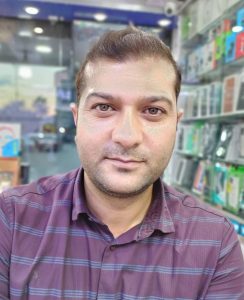
About the Translator
Dr. Shahnawaz Muntazir is an Assistant Professor of English in the Higher Education Department, Government of Jammu and Kashmir, and is presently associated with Amar Singh College, Cluster University of Srinagar. A scholar, teacher, poet, and translator, his interests include literary theory, modernism, postmodernism, ideology, and contemporary Kashmiri literature.
He is also a published Kashmiri poet whose poems have appeared in literary journals and on established literary and social-media platforms. He has done critical work on contemporary Kashmiri poets.
He was associated as a producer with the Kashmiri feature film Partav, which received the Award of Excellence at the 2013 Canada International Film Festival.
As an educator and author, Dr. Muntazir is also associated with Expressions: A Course in English Language and Communication Skills, published by Cambridge University Press in 2024.
The present translations emerge from his sustained engagement with Kashmiri poetry and its distinctive linguistic, cultural, and imaginative worlds. The poems included here have been selected to represent, as far as possible, the distinctive styles, thematic preoccupations, tonal registers, and representative poetic voices of the poets concerned.
***
Brief biographies of featured poets
1. Shahnaz Rashid is a contemporary Kashmiri poet associated with Sopore. His first poetry collection is Doad Khatith Guldanan Manz (Pain Concealed Behind Flower Vases). He is also a translator and has contributed to promoting Kashmiri as a literary language. In 2023, he received the SaMaPa Award for his contribution to Kashmiri poetry.
2. Nighat Sahiba is a contemporary Kashmiri poet from Anantnag, writing in both Kashmiri and Urdu. Her collection Zard Paneki Dair (A Heap of Shrivelled Leaves, 2016) won the Sahitya Akademi Yuva Puraskar in Kashmiri in 2017. She has also received the Akbar Jaipuri Memorial Award for Urdu poetry. She studied History at the postgraduate level and holds an M.Ed., and works as a teacher.
3. Nazir Azad is a Kashmiri and Urdu poet, writer, and literary critic. He has written extensively in both languages and has published more than a dozen books dealing with poetry, literary criticism, language, and literary culture. His Urdu publications include works such as Urdu Lughat Nigari: Riwayat aur Irtiqa, Urdu Lughat Nigari ka Tanqeedi Jaiza, Parda-e-Sukhan Ka, and Kashmiri par Urdu ke Asarat.
4. Naseem Shafai is a contemporary Kashmiri poet from Srinagar. She studied Kashmiri language and literature at the postgraduate level at the University of Kashmir and worked as a teacher/academic. Her first collection, Derche Machrith (Open Windows), appeared in 1999, followed by Na Thsay Na Aks (Neither Shadow Nor Reflection) in 2008/2009. The latter received the Sahitya Akademi Award for Kashmiri in 2011, making Shafai the first Kashmiri woman to receive the award.