2 December 2009 A.C.
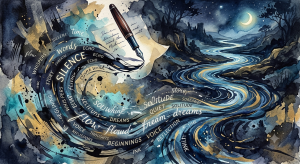
Today in the evening, I have started writing in my diary on the beautiful banks of the Vitasta in the Rajbagh area. Even during the chill times, the enthusiasm of the flowing Vitasta vitalises one’s heart and pleases it to sing.
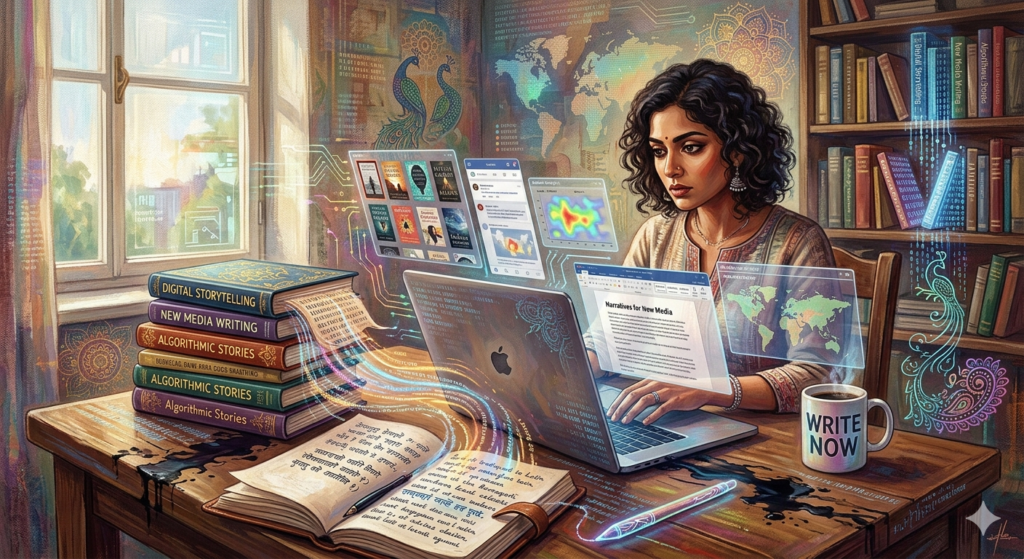
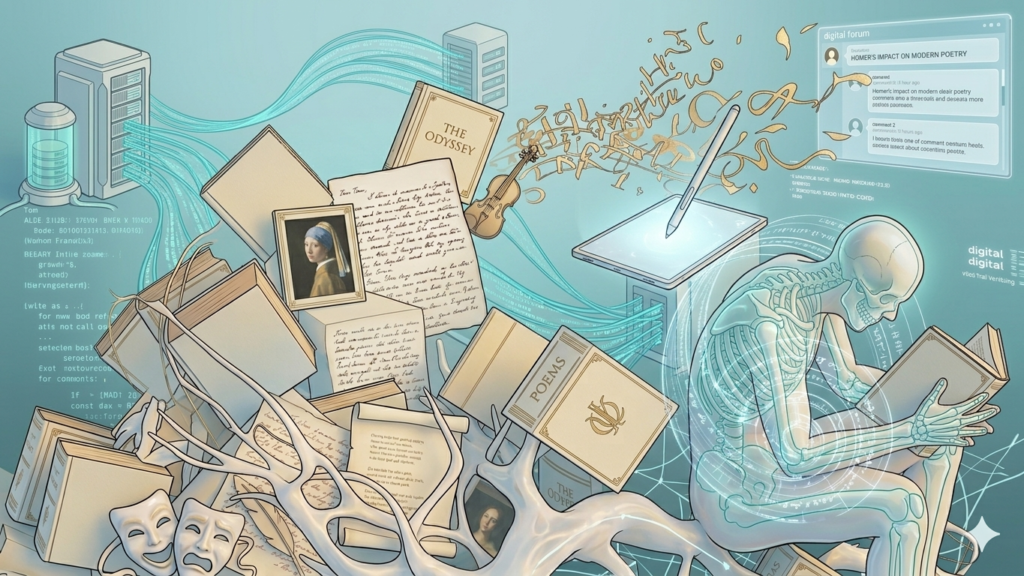
This era is the flowing Vitasta as well. It has been flowing since thousands of years, neither does it get tired nor does it stop to take rest. The passage of the era would continue in the times to come as well. We know the fact well that literature is a mirror to its era, the mirror in which we can see the face of the era in a better way. Literature too is flowing water. It changes its form every time and in every condition. We are aware of the literature of the present time. Today’s literature is different from the literature of yesterday and that of the day before yesterday in theme as well as in form. Tomorrow’s literature would also be different from today’s literature as it takes birth within the society. Tomorrow the condition of society would be different from what it is today. That is why the change would be observed in literature. In future, we would be more dependent on machines than we are at present. We have not only to change the lifestyle, but we have to change mental attitudes also. There would be infinite alterations in political, social and economic spheres. The impact of westernisation would gradually diminish, and the space would be filled by some Asian countries. Due to this the influence of nowadays third world would increase at the international level and as such the languages of these countries would develop and progress. Yes, the languages which will be harmonised with computer would develop more and get upper status. Like other languages of the country our language too has the challenge of computerisation and digitisation before it. Our software engineers can help us in this and we have to tirelessly work for it from right now.
One more point is that the attitude of the changes in the social conditions augur that literature would be free from so many tangles in future. Unnecessary complexities would not be accepted for pedantic effects or for showing off of hollow literary greatness. Yes, there is a hope that literature would be more meaningful and sense full. The literature available on electronic media would be more significant than that present only in books. We will move out of this era of non- concern for each other and enter in an era where we will need to think positively for each other. So for as in the present materialistic era where a man enticed with hollowness would suffocate in the run for perks and think for the values and ideals. After squeezing his self and spirit in tiny compartments the man would suffocate and he would break the binding borders and start thinking at humanitarian level. Sky would be his limit and he would grow greenery on the ground of thinking and multi coloured flowers would bloom there. The sweet smell of these flowers would find place in literature. The literature of new era would be advocate of human pleasure and all its branches would be clear and sacred. The conscience of a true litterateur can feel the pulse of tomorrow and his eyes can cross the borders of time and see tomorrow. Would this hope be against expectations that the roots of this type of tomorrow’s literature should be nurtured from today?
30 September 2010 A.C
We all know that literature doesn’t emerge from space, but it is a long continuity of varied knowledge, situations, experiences and forms. If this literature is to be analysed or evaluated, it will be possible only when the analysis is done based on knowledge, situations, experiences and forms. Today’s literary creation is a trial of identifying and understanding such basic bewilderments which have become integral paradoxes of our life. These bewilderments are moral, ideological, cultural, religious, social, economic, political and of various other types. Until a critic recognises and comprehends these pressures and bewilderments, he cannot approach the spirit of the literary work nor can he evaluate it perfectly. In reality, it is the duty of the critic to bridge the gap between the reader or listener and the writer. But it is equally true that for this work, a critic needs to have access to the literary work and be able to unravel the underlying meanings and sense of the creation and evaluate all the individual qualities of the creator. In addition to it, it is equally important to see how closely related the critic is to universal human affairs and attitudes. However it is truth as well that the critic would not be acquainted fully to these affairs and attitudes. He might be imprisoned in his fortes. This is observed mostly in such societies where there is a large difference between the contemporary global standards and the evolution in the education system. Due to this, the society gets moulded by a non-harmonising paradigm and gets involved in a serious conflict. Our society isn’t safe from the blow of such a conflict. It isn’t a myth but a reality. But voices have arisen against such a situation, which seems to be a myth. The mental attitude conceiving the new human of the new world has stood against it, and the wholehearted trial to fill the vacuum, which awkwardly subjugates our mental literary attitude for several decades, is underway. In this context, we cannot expect the best results from the critic. However, we cannot acquit the critic of his responsibility based on this condition. There are novel and fresh themes in the writings of the present-era writer. But there is a need for the process of criticism should be started systematically only after analysing the organic unity of the creative pressures which the writer experiences. Only then can justice be done to the work of the writer. A critic should be aware of the cultural milieu and the ideological context in which a literary work has been created. In addition to this, a critic’s ability to approach the ideological context of the writer results in a good analysis, appreciation and criticism. If the criticism is like this, it would be surely accepted as the literature of the first grade.
18 January 2013 A.C
Sometime before a seminar was held in university of Kashmir which was titled as “global values in literature” Today I recollected the seminar all of a sudden. The seminar and its title gave me a question as well to ponder over and the question is “what can we call healthy literature?”
After so many days, I felt the need to express my opinion to myself. Literature isn’t a mere projection of the background of the litterateur, but it is the name of life’s heartbeat in which there are hundreds of springs of pain and infinite autumns of pleasure. When this beating life becomes the kiss of the tearful eyes and holy incantation of the thirsty lips, the creator of the universe makes an effective sprinkle from the holy urn of pity. The sprinkle ablutes the earthly creators of the words, and the literature comes into being, and it makes and adores the era. This is the literature which provides us pleasure and bliss and quenches the thirst of centuries in moments. It is due to his literature which makes us capable of sojourning to the different sides of earth and skies.
Healthy literature is a representative of pious and undefiled values, and such literature is free from the bondage of flat ideologies. The literature of international standard or global literature is not confined to some set ideology but it is the literature of aesthetics and universality. It is such an aesthetic glance which isn’t intervened by any glasses of bias, jealousy or compartmentalisation. It has such a capability that the complete existence of creation comes before the eyes. Every such attitude which augurs new possibilities for expression is acceptable for the global literature. The literature of global quality does not accept any sort of compartmentalisation.
There is a need to revive such traditions in literature which have been put on the back burner by narrow-mindedness and jealousy. We have to put off the veil of narrow-mindedness from such illuminating universal traditions. For the illumination by new challenges and new enlightenment of literature, we have to solemnly resolve to stand against the darkness of ignorance. Perhaps only after that a way can be found to the creation of such a universal or global literature which will dignify our language and our creative potential.
***
Translated from Satish Vimal’s Diary by Ashraf Raavi