
Dr. Liaquat Ali

The novel ‘The Valley of Unfinished Songs’ by Umair Ahmed Khan is a story that evokes deep emotional responses and reflection. Reflecting its title, the story exhibits how an unfinished song connects the main characters in an emotional journey towards healing. The narrative moves around a Kashmiri Pandit family and their son named Kabir, who unexpectedly bonds with a blind Kashmiri boy named Armaan and how the story unfolds between them, with several other associated characters’ lives and their hardships revealed in between. Moving across time and memory, the novel sensitively portrays the identity issues and lived realities of the people in Kashmir.
Beginning in the Kashmiri Pandit conflict era, the story gradually transitions into the contemporary period with a nuanced portrayal of Kashmiri Pandit and local Kashmiri experiences. It rightly captures the atmosphere of fear and violence that compelled pandits to exodus, leaving their homeland, losing families, their deep-rooted culture, life after leaving Kashmir with empty hands and fear and trauma attached to the possibility of return. Simultaneously, the narrative also acknowledged the efforts of several local Kashmiri Muslims in assisting pandits leave the place safely, and also their struggles and traumas post-conflict. This depiction of both parties of the conflict in a neutral tone is a unique feature of the narrative.
The narrative vividly explores memories of abandoned neighbourhoods, silent temples, and fragmented family histories among generations who faced the conflict, illustrating their emotional condition. It also highlights how younger Kashmiri Pandits, though raised outside the valley, feel a strong longing to reconnect with Kashmir, their ancestral homeland, revealing an ongoing tension between belonging and distance. The traumatic life of conflict stakeholders and their impact on relations and the formation of new bonds runs deep throughout the story. The narrative has shown how history continues to shape both individual lives and collective consciousness.
The narrative does not avoid portraying the presence of extremists, terrorists, separatist movements, and heavy military surveillance that shaped daily existence. Importantly, the novel emphasises that even after the exodus of Kashmiri Pandits, the situation within the valley did not improve. Those who remained continued to endure relentless fear, recurring violence, and the painful loss of family members, demonstrating that suffering persisted across communities and generations. Conflict did not conclude with migration; instead, it evolved into an everyday reality marked by endless trauma and instability.
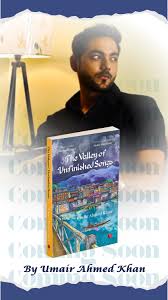
While the novel addresses displacement and trauma, it simultaneously highlights the breathtaking beauty of Kashmir. The valley emerges as a paradoxical space, stunning in its natural splendour yet burdened by layers of suffering. Snow-covered mountains, Jhelum rivers, and shifting seasons stand well-placed as silent witnesses to decades of violence, militarisation, and political uncertainty. The three parts of winter chillai kalan, chillai khurd, and chillai bacha are symbolically depicted as periods of great hardships. It also highlights the musical history of the land as one among the cultural elements that sustain the connection between people post-conflict. One of the remarkable aspects of this narrative is that rather than presenting Kashmir through political debates or ideological arguments, the author centres on human experiences, showing how prolonged conflict alters ordinary existence and leaves enduring emotional scars.
Stylistically, the novel stands out for its cinematic narrative structure. The storytelling unfolds through vivid scenes that resemble carefully composed visual sequences, allowing readers to experience events almost as though watching a film. Each character’s background is gradually revealed, explaining how personal histories, social circumstances, and traumatic experiences shape their present identities. The author skilfully connects narrative threads so that seemingly separate lives ultimately converge in meaningful ways.
Though there are a few aspects, such as repetitions of a few emotions or words here and there, it exhibits how the author has emotionally indulged himself within the narrative. However, the author successfully captured the beauty of the landscape, sharply contrasting with the emotional devastation hidden within it, reinforcing the novel’s central idea that beneath Kashmir’s serene exterior lie countless unfinished stories shaped by loss, endurance, and the enduring power of human bonds.
***